Showing posts with label Automobiles. Show all posts

Saturday, July 31, 2021

Toyota Land Cruiser Vs Jeep Grand Cherokee: Who Built The Better 4x4?

SUVs are perhaps the most suited cars to make a statement. In case, you are wavering between Toyota Land Cruiser and Jeep Grand Cherokee, which car to opt for, then read on as this article would perhaps enable you to finally make up your mind.

For the sake of statistics, SUVs had the biggest piece of the pie, 47.4 percent of all US car sales in 2019, according to Tom Libby, an automotive analyst at IHS Markit. And, the forecast is that by 2025, the light truck segment that comprises SUVs, pickups, and vans is poised to inch further and claim 78 percent of US car sales in comparison to the current 72 percent. Both Toyota and Jeep are masters of manufacturing top-notch SUVs. In this blog, let's have Toyota Land Cruiser LC 200 VX vs Jeep Grand Cherokee Limited Petrol [2017-2020] and decode who built the better 4x4.


Engine and Transmission

In terms of engine, Toyota Land Cruiser LC 200 VX noses ahead with its turbocharged 4461 cc, 8 cylinders V8 in comparison to Jeep Grand Cherokee Limited Petrol [2017-2020] that only has a 3604 cc, 6 cylinders Pentastar V6. These engines produce a maximum output of 262 bhp and 286 bhp, respectively.

However, in terms of transmission, Jeep Grand Cherokee Limited Petrol [2017-2020] turns the table and races ahead with eight gears, whereas Toyota Land Cruiser LC 200 VX remains stuck at six. The top torque for Land Cruiser and Grand Cherokee are 650 Nm @ 1600 RPM and 347 Nm @ 4000 RPM, respectively.


Related: This Is The Most Reliable Jeep Grand Cherokee Year To Buy Used


Dimensions and Weight

Toyota Land Cruiser LC 200 VX dominates Jeep Grand Cherokee Limited Petrol [2017-2020] in terms of dimensions. The side-by-side comparison lets us know that the length of a Land Cruiser is 4950 mm in comparison to Grand Cherokee's 4828 mm. Similarly, the width and height of the former (1980 and 1910 mm) is a bit more than the latter (1943 and 1802 mm).

Jeep Grand Cherokee Limited Petrol [2017-2020] has a larger wheelbase- 2915 mm in comparison to Toyota Land Cruiser LC 200 VX's 2850 mm. The ground clearance is 225 mm for Toyota Land Cruiser, whereas, for Jeep Grand Cherokee, it is 171 mm. The curb weight for Land Cruiser and Grand Cherokee is 2725 and 2432 kilograms, respectively.


Related: Here’s What Makes The Toyota Land Cruiser A Classic


Suspensions, Brakes, Steering, and Tyres

While the Jeep Grand Cherokee Limited Petrol [2017-2020] still hops on Coilover steel springs, Toyota Land Cruiser LC 200 VX employs KDSS technology for both front and rear suspensions. Both vehicles employ disc brakes. The minimum turning radius for Land Cruiser is 5.9 meters, slightly more than Grand Cherokee, which has a radius of 5.8 meters.

Both Toyota Land Cruiser LC 200 VX and Jeep Grand Cherokee Limited Petrol [2017-2020] use hydraulic power-assisted steering and alloy wheels. However, the former uses an alloy spare wheel, whereas the latter uses steel. Land Cruiser generally uses wider tires in comparison to Grand Cherokee.


Safety and Security

Toyota Land Cruiser LC 200 VX comes with 10 airbags, whereas Jeep Grand Cherokee Limited Petrol [2017-2020] has only seven airbags to offer. However, Grand Cherokee scores over Land Cruiser with middle rear three-point seatbelt and headrest. Both bring child seat anchor points and seat belt warning systems to the table.

In terms of security, both Toyota Land Cruiser LC 200 VX and Jeep Grand Cherokee Limited Petrol [2017-2020] have engine immobilizer features. For central locking, Land Cruiser uses remote technology, while Grand Cherokee applies keyless technology. Both the vehicles offer speed sensing door locks and child safety locks.


Related: 2022 Jeep Grand Cherokee: Here's What We're Expecting


Comfort and Convenience

To ensure that you keep your cool, Toyota Land Cruiser LC 200 VX employs third-row AC along with the obligatory front and rear rows, which is also present in Jeep Grand Cherokee Limited Petrol [2017-2020]. To keep you warm in winter, both employ heaters.

Jeep Grand Cherokee Limited Petrol [2017-2020] lets you have cabin-boot access, a feature that is missing in Toyota Land Cruiser LC 200 VX. The former also has two 12 volt outlets in comparison to the latter. The other features that are more or less identical are- mirrors, cruise control, keyless start, and parking assist and sensors.


Related: The 10 Most Insane Modified Toyota Land Cruisers We've Found


Seats and Upholstery

In terms of seat upholstery, both Toyota Land Cruiser LC 200 VX and Jeep Grand Cherokee Limited Petrol [2017-2020] tick all the basics right with leather seat upholstery and leather-wrapped steering wheel and gear knob. The difference pops up with the passenger seat wherein the latter ensures that it is 12 way electrically adjustable in comparison to the former, which limits itself to only six.

Jeep Grand Cherokee Limited Petrol [2017-2020] continues to outshine Toyota Land Cruiser LC 200 VX with dual-tone interiors while the latter is limited to only single tones. However, the latter leaps forward with the feature that allows full folding of the rear seat, whereas the former allows only partial foldability.


Entertainment, Information, and Communication

For displaying information, Jeep Grand Cherokee Limited Petrol [2017-2020] is undoubtedly better with touch-screen displays, whereas Toyota Land Cruiser LC 200 VX is stuck at TFT displays. Moreover, Grand Cherokee also has display screens for rear passengers, a crucial feature that is missing in Land Cruiser.

Toyota Land Cruiser LC 200 VX topples Jeep Grand Cherokee Limited Petrol [2017-2020] when it comes to entertainment with CD player and DVD playback systems, features that are not present in the latter. However, Grand Cherokee has voice command to boast off, a feature that is unmatched in Land Cruiser.


Instrumentation

In terms of trip meter, Toyota Land Cruiser LC 200 VX opts for multi-function display, whereas Jeep Grand Cherokee Limited Petrol [2017-2020] retorts to electronics 2 trips version. Apart from that, there is nothing to separate between these behemoths and they are armed with similar instrumentation clusters and clocks and warning for low-fuels and door ajar.

Jeep Grand Cherokee Limited Petrol [2017-2020] shifts gear and noses ahead when it comes to indicators as it has in its arsenal both gear and shift indicators. Sadly for Toyota Land Cruiser LC 200 VX, its response is blank when it comes to these indicators.

These Modern SUVs Have Glaring IssuesThat No One Should Ignore

From faulty engines to worn-out brake pads and electric wiring flaws are common issues in modern SUVs. However, people nowadays ignore these problems and continue with their daily routines. Although some of these errors are negligible, some are not and can cause potentially serious issues. Manufacturing and maintenance of an SUV are expensive tasks.


Many new SUVs have been launched that focus solely on luxury and ignore other must-have features valued for reliability. This causes many glaring issues in an SUV, be it a broken-down engine, petrol leaks, or even a rattling steering system. So, in order to keep you safe and sound, let's check out these modern SUVs with glaring issues that no one should ignore.


Related: 10 Of The Safest SUVs Available In 2021


BMW X1: Steering Issues And Suspension Issues

The BMW X1 caused a splash in the luxury subcompact SUV class with its ardent engine, user-friendly infotainment controls, and spacious cabin and cargo. A 2.0-liter four-cylinder engine with 228 horsepower and 258 pound-feet of torque powers this car. It's connected to an eight-speed automatic transmission that shifts smoothly. The rattle in the braking system usually occurs due to the BMW suspension systems.

These systems are generally complicated; thus, they can have numerous difficulties contributing to your vibration problem. For example- sometimes many ball joints and bushings might wear down or become loose at the same time.


Related: 15 Most Glaring Problems With BMW's SUVs


Buick Enclave: Braking Issues

The Buick Enclave is a midsize crossover with 3-row seating that was introduced in 2007 for the 2008 model year. Every Enclave comes with a 3.6-liter V6 engine that produces 310 horsepower. An inconspicuous automatic nine-speed transmission drives either the front or all four wheels. It certainly isn't the fastest crossover, but it's fast enough that there's never any fear while merging onto the highway.

Owners and lessees of the Buick Enclave have filed repeated complaints, such as mushy brakes and brake pedals that lock up or don't work when used, with the National Highway Traffic Safety Administration about reoccurring brake difficulties that could jeopardize their safety.


Dodge Journey: Cabin And Transmission Troubles

The Dodge Journey made its premiere at the Frankfurt Motor Show in 2007. It is a mid-size crossover SUV produced and sold by FCA's Dodge brand from 2009 to 2020, with a makeover for the 2011 model year. It is, without a doubt, the most affordable three-row SUV on the market today.

The Dodge Journey is an antiquated and average performance that is smaller than a normal midsize SUV. It travels smoothly and is quite quiet, but that's about it. It lacks agility and poor fuel economy thanks to the optional 3.6-liter V6 and a sluggish transmission. To make it worse, it also has a cramped third-row seat.


Related: The End of Dodge's Journey and Grand Caravan


Ford Escape: Ignition Issues

The Ford Escape is a tiny crossover vehicle that has been produced for four generations, starting in 2000. Its tall and squared-off form makes effective use of space in a tiny package, comfortably accommodating passengers and goods. Because of its low ground clearance and lack of all-wheel drive, it also had the least level of off-road capability.

The most prevalent problem experienced by Ford Escape owners, according to RepairPal.com, is ignition misfire. A lot of customers said the ignition coils had failed and needed to be replaced. The total cost of a replacement coil and installation is between $576 and $711 dollars. The issue is pervasive, affecting all engine sizes for all model years between 2001 and 2013.


Related: Ford Escape Spotted With New Look


Mazda CX-3: Lack Of Rear Seat Space

The Mazda CX-3 shares the same platform with Mazda 2 supermini, but it's longer, wider, and taller to reemphasize its SUV look. Portraying the principle of Mazda's 'right size' to engines, it offers larger engines with moderate power outputs instead of opting for little turbo units across the board. The CX-3 falls short in a few aspects. The biggest difficulty that test drivers discovered was a lack of space in the back, which made it difficult to transport large groups or do family outings.

Moreover, consumer reports describe the driving experience as rather claustrophobic, with small windows and a lack of elbow room leading to an uncomfortably tight feeling. Furthermore, the driving is rather loud and might be uncomfortable – the CX-3 does not take bumps well and can get a little noisy at higher speeds.


Related: 2019 Mazda CX-3 Crossover Gets More Power


Tesla Model X: Fussy Falcon-Wing Doors

The top-hinged rear doors on the 2021 Tesla Model X SUV are impressive, as is the long-range battery capacity. The electric motors in this car provide on-demand all-wheel drive as well as performance-car acceleration. The handling is also remarkably agile for a vehicle of this size. Its optional third row of seats should appeal to buyers who are looking for greater convenience and space.

There were numerous issues with the futuristic doors and mechanics when the Tesla Model X first went on sale. The automated shutting mechanism, like some of today's minivan sliding doors, is troublesome. It appears to open and close the doors normally, but occasionally detects something and does not completely close them.


Related: These Are The Coolest Features On The Tesla Model X


Volvo XC90: Automatic Emergency Brakes

In terms of luxury midsize SUVs, the Volvo XC90 is toward the bottom of the list. It has a roomy and luxurious cabin, a long list of standard equipment, and excellent fuel efficiency, but its lackluster performance holds it back.

Volvo admitted about the AEB issue and here is the verbatim statement: Automatic Emergency Brake - support system has been found to not function properly under certain conditions" following a software installation in January 2019. And, yes XC90 was one of the nine models that were recalled due to this issue.


Related: 2021 Volvo XC90 T8 Inscription Recharge Review


Volkswagen Atlas: Meter Mechanical Problems

The Volkswagen Atlas is a tough competitor in the three-row SUV segment. The Atlas is a pleasant car to drive, with a smooth ride and surprisingly quick handling for its size. The cabin is peaceful and spacious, with a third-row seat that can comfortably accommodate adults. The controls are well-designed, with easy-to-read gauges and a simple infotainment system.

Despite the incredible features of the Volkswagen Atlas, owners were disappointed when they discovered technical issues with meters. The V6 engine and smooth eight-speed automatic make it appear active in everyday driving, but its acceleration lags behind competitors, brakes screech, and the overall fuel economy of 20 mpg isn't particularly great. 

Sunday, March 21, 2021

5 Top Automatic Cars in India

Steering through criticism, automatic transmissions are setting a norm for Indian streets now. Despite a lot more cars still feature a manual gearbox, the cars boasting of automatic transmissions is linearly increasing, especially true for metro cities. And, the best part is that you need not necessarily have to shell out a truckload of cash to own one of these vehicles. There are several options you can opt for — from an economical AMT to the tech-trendy DCT.


Ford Ecosport (Torque Converter)

The underrated Ford Ecosport is among the first automatic SUV in its segment which originated the trendy sub-four meter SUV range. It boasts many eye-catching features such as a powerful petrol engine, awesome automatic gearbox, six airbags, high ground clearance, hill assist, blue tooth enabled car phone and music, reverse camera and parking sensor, cruise control, and sturdiness. Overall, you would get a great bang for your bucks with this car.


Hyundai Santro (AMT)

Santro has been a game-changer for its parent company-Hyundai. This hatchback is the sole one in its segment with a four-cylinder engine. It offers a seamless and vibration-free driving experience. Laced with a 1.1-liter aspirated engine its motor churns 69ps of peak power and the corresponding torque is around 99Nm. It also boasts a five-speed AMT gearbox, making it a perfect budget-friendly city car.


Honda City (CVT)

Renowned for its excellent efficiency, the fifth generation Honda City would sweep you of your feet. It boasts a better and more potent 1498 cc four-cylinder petrol engine with a DOHC setup. A multi-function steering wheel coupled with a CVT transmission system empowers this c-segment sedan to cruise on city roads. With a host of sought-after features, this Honda model is one of the most in-demand vehicles in its segment.


Hyundai Creta (DCT)

Creta has managed to position itself on the crest in the category of compact SUVs. With as many as three automatic transmissions with their respective engine combinations, it offers awesome options for consumers. You may take a pick a combination according to your choice. The mature populace may prefer the fuel-efficient iVT, whereas the Michael Schumacher fan brigade would queue up for the lightning-fast DCT model. 


Mahindra Thar (Torque Converter)

If you are an ardent supporter of vocal for local then you would love the latest stud from the stables of Mahindra. This sleek off-roader offers a couple of engine and transmission options at your disposal. You can pick from either diesel or petrol powertrain options. While the diesel delivers a peak power of 130 bhp and 300 Nm of torque, its counterpart, the petrol version power churns impressive figures of 150 bhp and 320 Nm, respectively.


Now, that you have gone through the list, for which one does your heartbeat pulsates automatically? Leave a comment and let the world know.

Thursday, January 14, 2021

Design of Different Types of Bicycle Frames and Their Effect on Drag

QUESTION: 

How does drag affect the different types of bicycles with respect to their frames?


Contents-

Abstract

Introduction

Terminology

Investigation

  • Manufacturing

  • Type of cycles

  • Cycle racing and modification of bicycle frames


Abstract

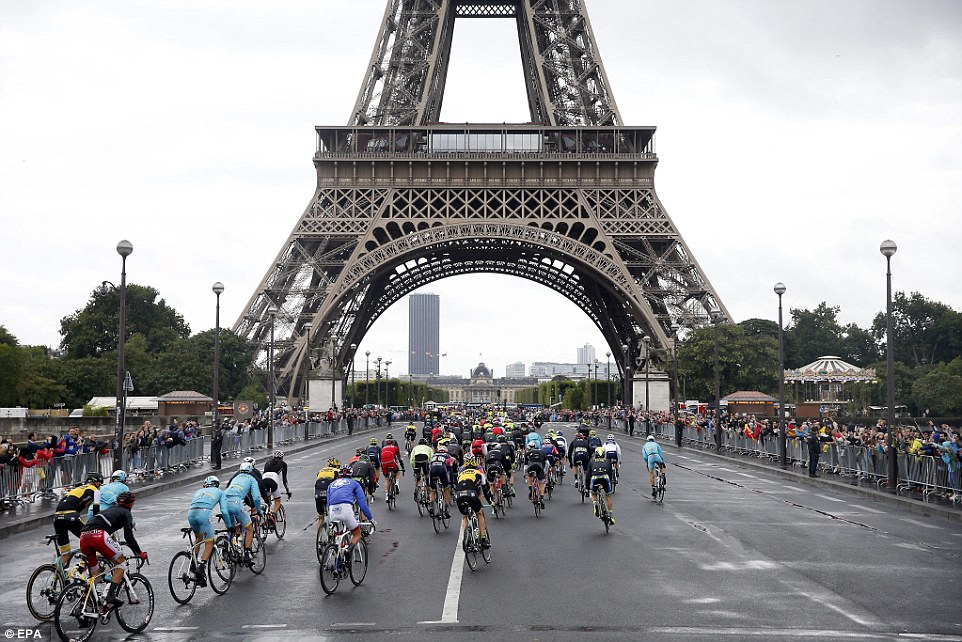
Bicycles, as well as most modes of transport, came into existence in order to ease the commutation of human society. Bicycles are still a necessity for poor people, especially those living in rural areas. Cycle riding is also now the uber-cool trend, especially in developed countries. Cycling (especially racing) is a popular game all over the world. It has its place in the Olympic games. The most popular cycling race on the planet is- Tour De France. 


Image source- http://www.dailymail.co.uk


People have been trying to lessen the effect of drag while racing since the time the bicycle was first invented. They could hardly imagine that something which was not visible but can only be felt was the major barrier. The people having a vested interest in racing started looking at the problem of drag seriously. They started coming up with different types of frames to reduce drag. I plan to look at the ways drag affects different types of bicycles with respect to the frames.


The aim of this essay is to figure out the effect of drag on the different types of bicycles with respect to their frames. My investigation started with consulting multiple resources relevant to bicycle racing. To serve my purpose, I have emailed multiple companies, engineers, designers, and racing teams. After collecting enough material, I started comparing the answers and the results. I also set a couple of tests to observe the theories first hand.


Introduction

Irrespective of the fact that human beings have invented numerous vehicles, the bicycle though only human-powered remains the most popular choice for the human race. The total number of bicycles on the planet is about 800 million, far exceeding any other vehicle. A cycle as though limited by human power is also the most energy-efficient. A cycle is not only used for commutation or racing but for fitness and touring as well.


Since the invention of bicycles with the ‘Running Machine’ in 1817, there has been a race going on to improve the security and speed of bicycles. Once, the cycles became relatively safe, the focus mostly shifted on how to improve the speed. The reason for this shift in focus is the innate competitiveness of human nature. Be it, kids, teenagers, or professional cycle racers everyone wishes to get ahead of the competition. The cycle makers do take part in this obsession and further fuel it by introducing new models, relevant advertisements, and the latest technologies.


Drag is the greatest barrier faced by every cyclist. Drag is the resistance offered by air/wind that a cyclist has to overcome in order to move forward. The drag accounts for 70 to 90% of the total resisting force a cyclist has to come to terms with. The velocity of a cyclist propelling the cycle forward would always have the limitation of human power. Thus, the aim is always to reduce drag.


As competitive cycle racing started getting popular, the cycling engineers/manufacturers and even individual racers started pondering how to reduce the drag in order to increase efficiency and speed. As expected most of the innovations came from the people/firms participating in the cycle races. In order to reduce the drag, the innovators realized that they need to make major improvements in bicycle frames. The technology and materials used in the manufacture of the latest cycles have taken enormous leaps. As we discuss the topic, professional designers, engineers, cyclists, and visionaries keep on trying to find the best/optimum ways to design bicycle frames.


Terminology-

Find below the explanation of some important terms which are a requisite for this essay- 

  1. Drag- Drag is the total resistance a cyclist faces when he tries to pedal forward. Please find below the diagram demonstrating the drag- 


  1. Friction- Friction is the resistance a surface provides to the other substance/object when the latter tries to move on it.

  2. Aerodynamics- Aerodynamics is the study of the movement/motion of air around a solid body.

  3. Pneumatic tires- Air-filled rubber tires.


Investigation-  

I decided to investigate the following- 

  1. Manufacturing

  2. Type of cycles available

  3. Cycle racing


Manufacturing


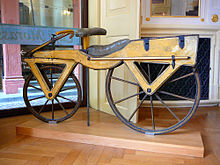
                                                                      Image source- Wikipedia


Cycles when they were first manufactured, were made up entirely of wood. No need to say that those cycles were not very practical for the regular use of common folks. Drag was certainly not a major factor as in order to move forward, one has to push the ground using one’s feet. The paddles were missing in this cycle. The rider could mount the cycle only when he is moving downhill. That’s the only time he can feel the drag working against his momentum.


Image source- Wikipedia


The ‘Velocipede’ was the first cycle to contain the paddles. It was a highly risky prone cycle. It was also the first bicycle to be mass-produced. It, however, enabled the rider to paddle the cycle and experience the drag even on any type of ground. Still, the major issue with the Velocipede was certainly safety. No one was wondering about the drag a rider has to face while riding a velocipede.


Image source- Wikipedia


The ‘Roadster’ which was the safest cycle till that date with pneumatic tires was the first bicycle to be used for races. The initial races were mainly for recreational purposes. The frames of these cycles were generally made up of steel. The most interesting part is that the diamond-shaped frames used for the first time on these bicycles are still used in most cycles including the latest racing cycles.


The frames of the latest racing bicycles are made up of carbon fibers and other exotic metals like Titanium, Aluminium, etc. The frames made up of carbon are far lighter and more aerodynamic. The aerodynamic carbon frames greatly reduce drag. Due to the significant weight reduction, the rolling friction reduces too. The latest carbon frames aid the cyclist to combat the resisting drag. It is thus imperative that the research to find the best/optimum designs for bicycle frames must go on. 


The involvement of these new materials allows manufacturers to use aerodynamics to their maximum effect. They can now come up with unusual curves that were not even imaginable a few years ago in order to minimize the drag. 


Image source- http://www.gaadi.com


Types of Cycles with Unique Frames


There are multiple types of bicycles available as options for the modern rider. Let us consider the effect of drag on each, one by one-


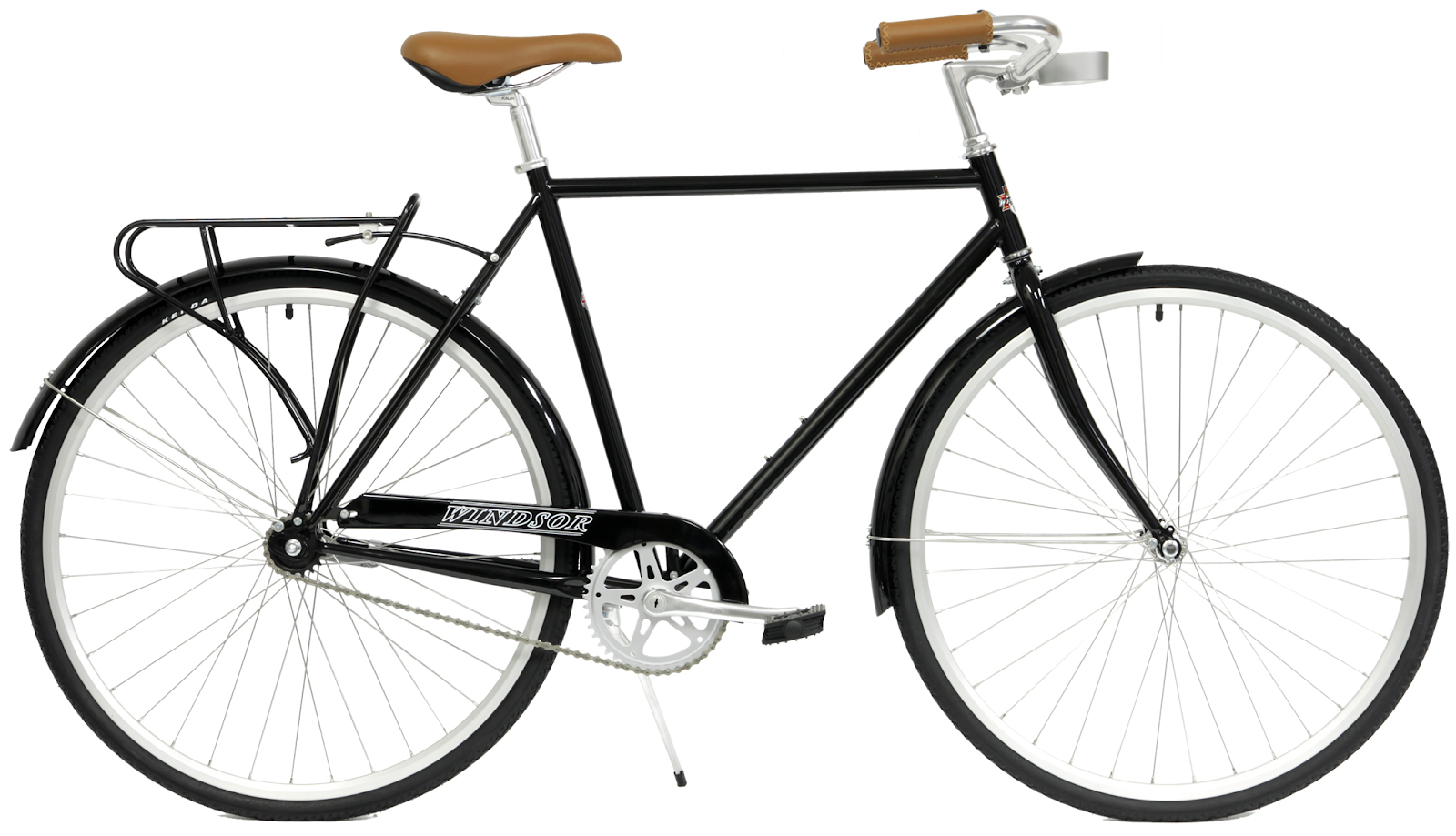
  1. City Bicycles- Ironically though the model is called City Bicycle, nowadays it is mostly used in rural areas of India. These bicycles are mostly designed for comfort. The identifying feature of these bicycles is the raised handlebars. As it can be easily noticed that the frame over here in this type of model supports the upright body position while riding. I tried both the gents' and ladies' models. Due to the nearly straight backbone position of the rider, this position is quite comfortable. As I have tested myself the rider feels more in control of the cycle as the handle grips are relatively close to the body. Also, he/she can use the complete force of his legs while peddling. Sheer this type of riding position increases though increases the drag. The reason being the large surface area the rider’s body provides as resistance to wind. The chain cover which protects the chain from dust also increases the resistance. It is very hard to accelerate quickly in this cycle. The maintenance of the speed though is a bit easier in comparison. The materials which are generally used for these bicycles frames are steel and aluminum.


City Bike- Gents

Image source- http://www.bikesdirect.com


City Bike- Ladies

Image source- Hero Cycles


2) Road Bicycle- These bicycles are generally designed for proper concrete/cement roads. The structure of these cycles enables the rider to ride in the Obree position. The position, which was first introduced by Graeme Obree to break the world record. As I tried this cycle, I felt that though this position is quite uncomfortable it drastically reduces the surface area of the body exposed to the air/wind. This drag is thus considerably reduced in these types of cycles. The road cycles are generally recognized by their dropped handlebars. The dropped handlebars are actually quite helpful in the reduction of drag. The air friction which I felt was mainly into my face, head, shoulders, arms, and a bit on the back.

                                                     Image source- TREK


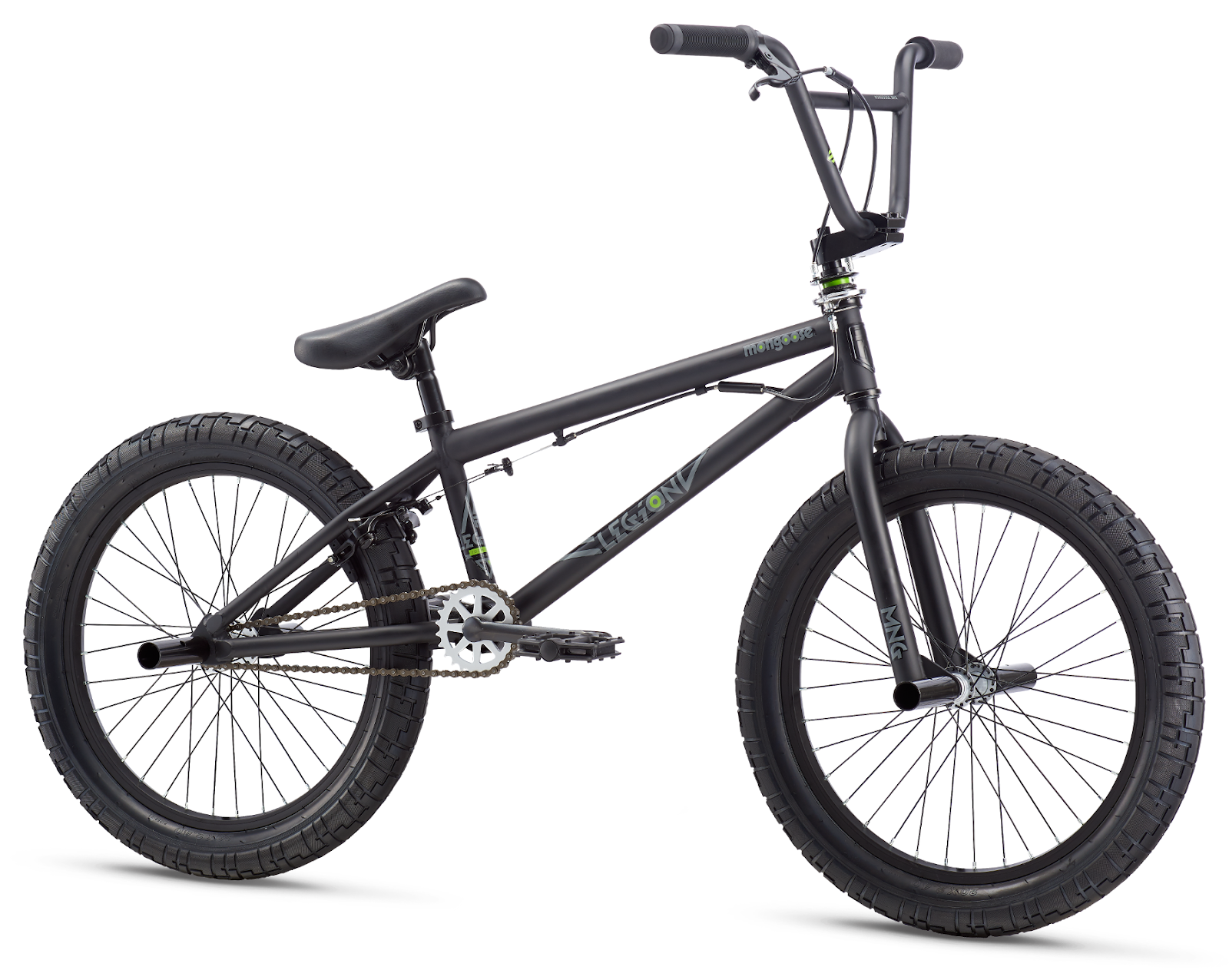
3) BMX Bicycle- This cycle is mostly used for stunts and off-road biking. As I mounted the cycle and pushed forwarded I felt a lot of drag. Probably I faced the maximum drag as I was paddling the cycle without sitting on the seat. Literally, my entire body was facing the drag. 


Image source- https://www.trackandtrail.in


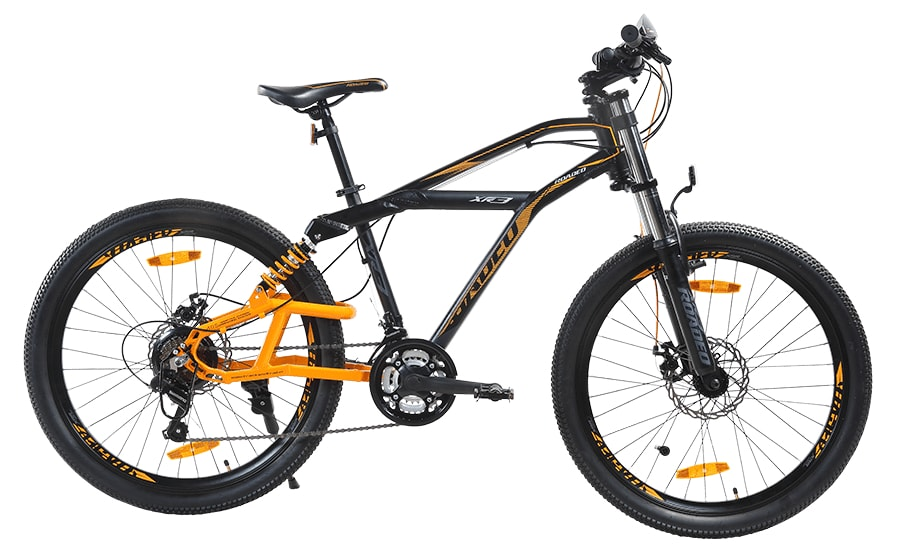
4) Mountain Bicycle- These types of bicycles though are excellent on rough terrain they are the worst in terms of resistance. One is better off walking during windy weather than trying to run out of breath trying to peddle this cycle. I noticed that the handlebars were straight which provides the maximum surface area to the air pressure. I tried moving downhill and could easily feel the aerial force against my chest, arms, face, and abdomen. The thick tires also do resist more in comparison to other cycles. Even the thick shock absorbers on the frame offer maximum resistance due to their thickness.


Image source- https://www.trackandtrail.in/

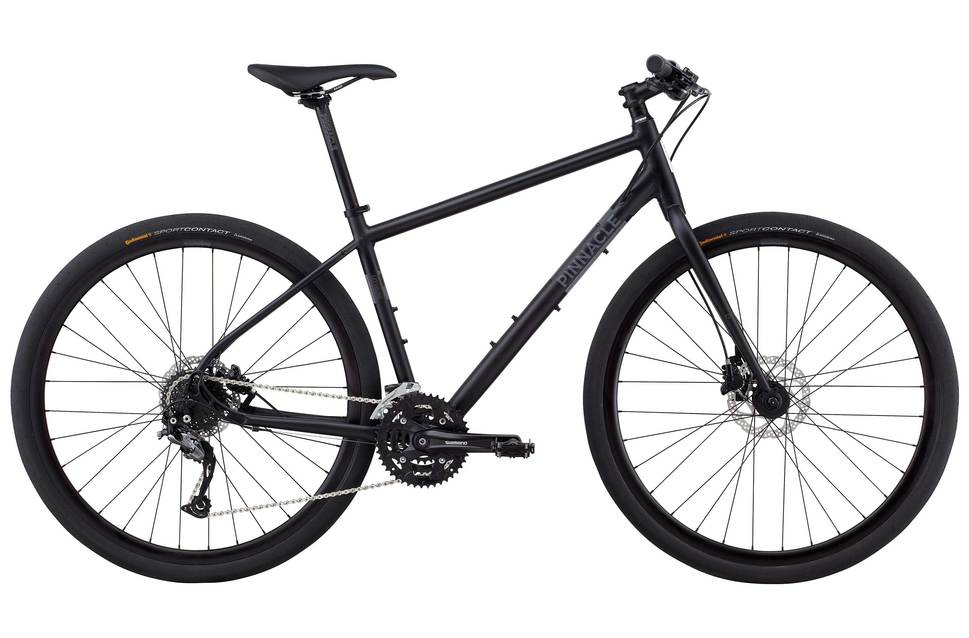
5) Hybrid Bicycles- These cycles were designed to provide the best of the world features. These are essentially a mix of mountain cycles and road cycles. These cycles generally feature straight handlebars but come up with slick tires. The frames are also thicker in order to maintain sturdiness. I felt that the open-chested riding position increases the drag as well as the thick triangular stem. Most of the friction, I felt was on my face, chest, and arms.


Image source- https://www.evanscycles.com


6) Racing cycle (Pro)-  The latest racing cycle that we come across in major pro cycle races is nearly as aerodynamic as a modern airplane. These are tested in the same wind tunnels. As it can be noted from the picture below the biggest advantage of it is clearly the ‘Superman’ position it allows its riders to assume. This position is possible due to the raised seat and the handlebars protruding in front of the cycle. These cycles are made up of exotic materials like carbon, aluminum, titanium, etc. I was excited to try this cycle. Luckily, I came to know about a distant cousin, a cycling enthusiast who posses this expensive cycle. The cycle moved very smoothly especially on artificial turf. Due to the superman position, I have to be in, in order to ride the cycle, most of the drag I felt was on my back. The drag was far less in comparison to all the cycles. 


Image source- https://www.specialized.com/


Cycle Racing- It is important to discuss a bit about cycle racing as surely this is the most important and immediate reason that the need for improvement in cycles in order to combat the drag arose. The first recorded race was held in Parc de Saint-Cloud, Paris on May 31, 1868. James Moore of England won the 1200 meter race riding with a frame made up of wood and iron tires. Racing was so risky that the term ‘breakneck speed’ was coined to refer to the injuries the rider might have to bear in case he is moving at a high velocity.


Presently there are not only multiple types of tournaments but also multiple forms of competitions. These races range from road racing, track racing, cyclocross racing, BMX bicycle racing, and mountain bicycle racing, etc. Most of these competition does have different athletes and different form of bicycles competing in it.


Image source- http://eu.ironman.com